

the next wave of land grabs at the 'end of the world'
warm resilience cracks through an icy patagucci veneer
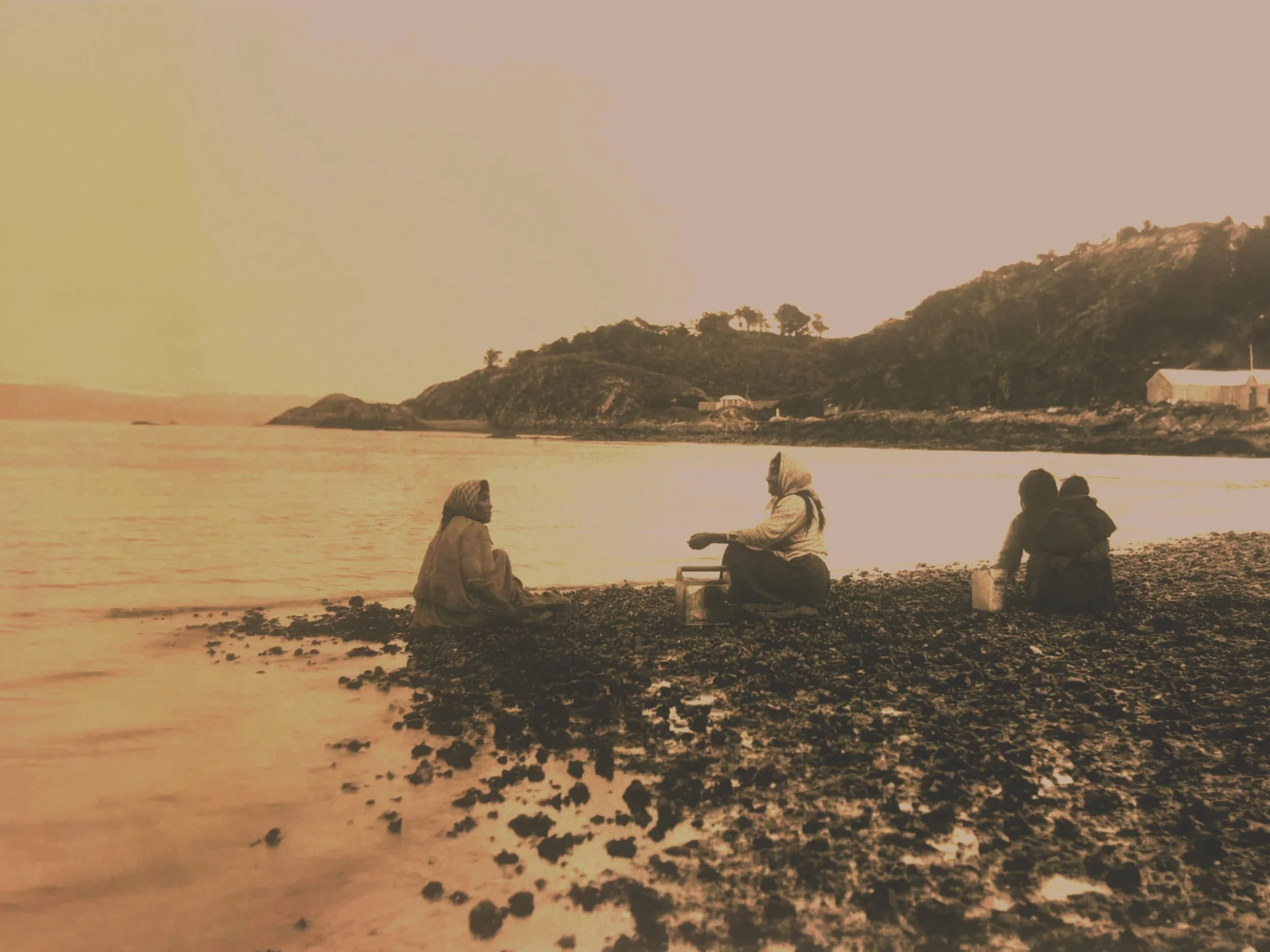
translated caption: “At low tide, the [Yámana] women gather mussels and limpets.” photo from gusinde, m. 2015, pg 151
i wandered back to the coastline we found on my bday with the stunning mountain range across the channel and horses grazing near the shore. i’ve been working on a painting of this vista and was pulled to sit with it once more.
i’ve been cautious about painting what i’ve been called to. i’d like to paint the land with reverence for those who were nourished by it through thousands of harsh winters. i also need to refrain from a colonial gaze or the romanticization of a people that are still here, whose lands and rights continue to be diminished.
as i sit in my rental car on cleared land near the water, i see development maps for new bougie neighborhoods. i also see something i missed my first time here.. the street is called, “costa de las Yámanas”. i’ve been working on painting an imagined foreground of native plants customarily gathered by the Yámana people.
i think i might be on the right track… after the first pass of my painting, it seemed as though a figure was standing on the shore. previously that week, i bought a book on the indigenous peoples of this area. martin gusinde photographed the Yámana people between 1919 and 1923 while participating in their way of life during the liminal time that their land and practices were being stripped away.
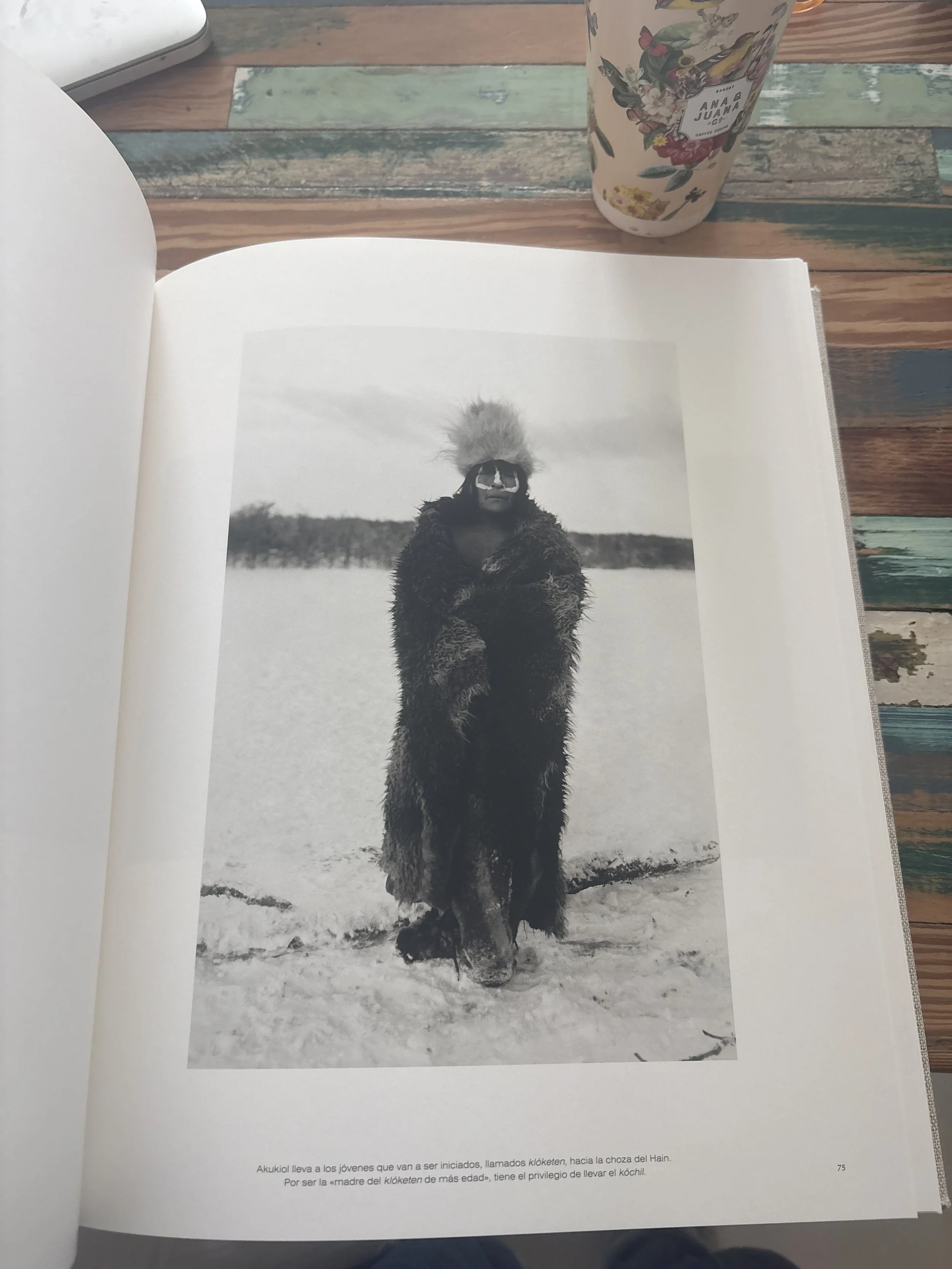
translated caption: Akukiol leads the young men who are to be initiated, called klóketen, to the Hain’s hut. As the «mother of the oldest klóketen», she has the privilege of carrying the kóchil. photo from guisinde, m. 2015, pg. 72
i had an initial instinct to paint indigenous ancestors watching over the land. upon studying the history and related works, it quickly became apparent that this type of subject matter is disrespectful. living indigenous people have had to continually fight the narrative that their entire population is gone. so, i pivoted my approach.. but still, the figure appeared. she looked similar to a photo of the revered madre del klóketen de más edad, or mother of the eldest son, donning a large fur and a ceremonially painted face. in my painting, it appeared as though she was standing on the shore near the coast of the Yámana. she is now layered within an abstract portrayal of the peat bogs that were here before [and that may rise again when our modern societies fall].
the coastal bogs in my painting represent the ground that once nourished the Yámana for thousands of years. now, modern residents are being systematically pushed from the low-lying, habitable areas and clinging to steep mountain slopes.
we are staying in a nice condo here. one day, i heard a drum circle and, from the window, saw people gathering. i put my boots on and sped-walked down the hill towards them. i witnessed a scene of many professionals dressed in union-related apparel holding blue flags, as well as a group of 5-7 people with red flags and Palestine flags and a bee flag and little handmade cardboard signs. this group was pointing their signs towards the main blue drum circle group. the signs called attention to the harms of current legislation being pushed forth to begin mining in this area. the signs’ messages spoke to saving the glaciers and saying no to the “reform” solution being proposed. i lingered near this group as i took in the scene.
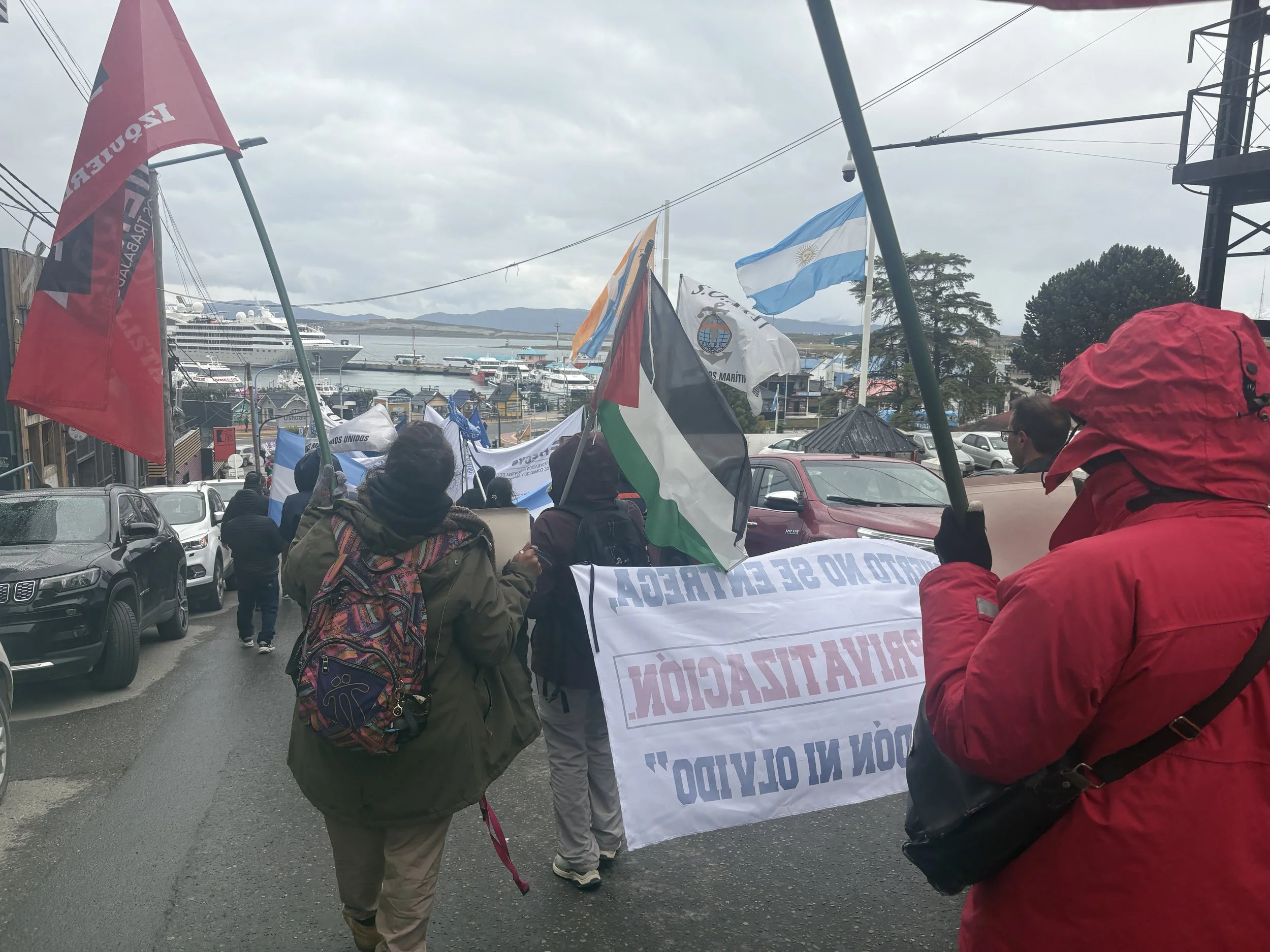
march to the pier with cruise ships in the background, banner reads: EL PATRIMONIO NO SE ENTREGA [(public assets) are not to be surrendered], NO A LA PRIVATIZACIÓN (no to privatization), NO HAY PERDÓN NI OLVIDO (there is no forgiveness or forgetting)
after awhile, i asked someone about the specifics of the march. unfortunately my spanish comprehension isn’t where it should be, but luckily one student spoke english and filled me in. the ATE (Asociación de Trabajadores del Estado, i.e., the state workers’ union) and socialistas walked together down the main tourist street towards the port. Frederico, who is studying to become a history teacher, told me about the complicated struggles of working people in this town.
the official unemployment and poverty statistics do not reflect the city’s urban vulnerability. the situation is multidimensional, where people are facing the environment, the law, and the economy all being stacked against them. most of the new development is geared towards people like us - temporary residents with foreign funds, while the residents here are pushed further towards the fringes.
tourists stop here for a day or two to hike a few mountains or board cruise ships to antarctica. there’s a glossy downtown area designed for consumption. visitors seldom bear witness to the reality of those who live and work here. many local workers are paid by the day, and choose to save in american dollars or other foreign currencies since their own is so unstable.
because the government hasn't created a path for people to access affordable, legal land or housing, many families are building makeshift structures on public mountainsides. they have little choice but to “squat” in these steep areas. meanwhile, tons of hospitable land close to the water sits empty, held by speculators waiting for prices to peak.
since the informal settlements aren't legal in the eyes of the state, there’s no infrastructure in place to make them safe - roads, or access to water, electricity, and sewage systems. there’s no drainage for the snowmelt or stable foundations for the mud.
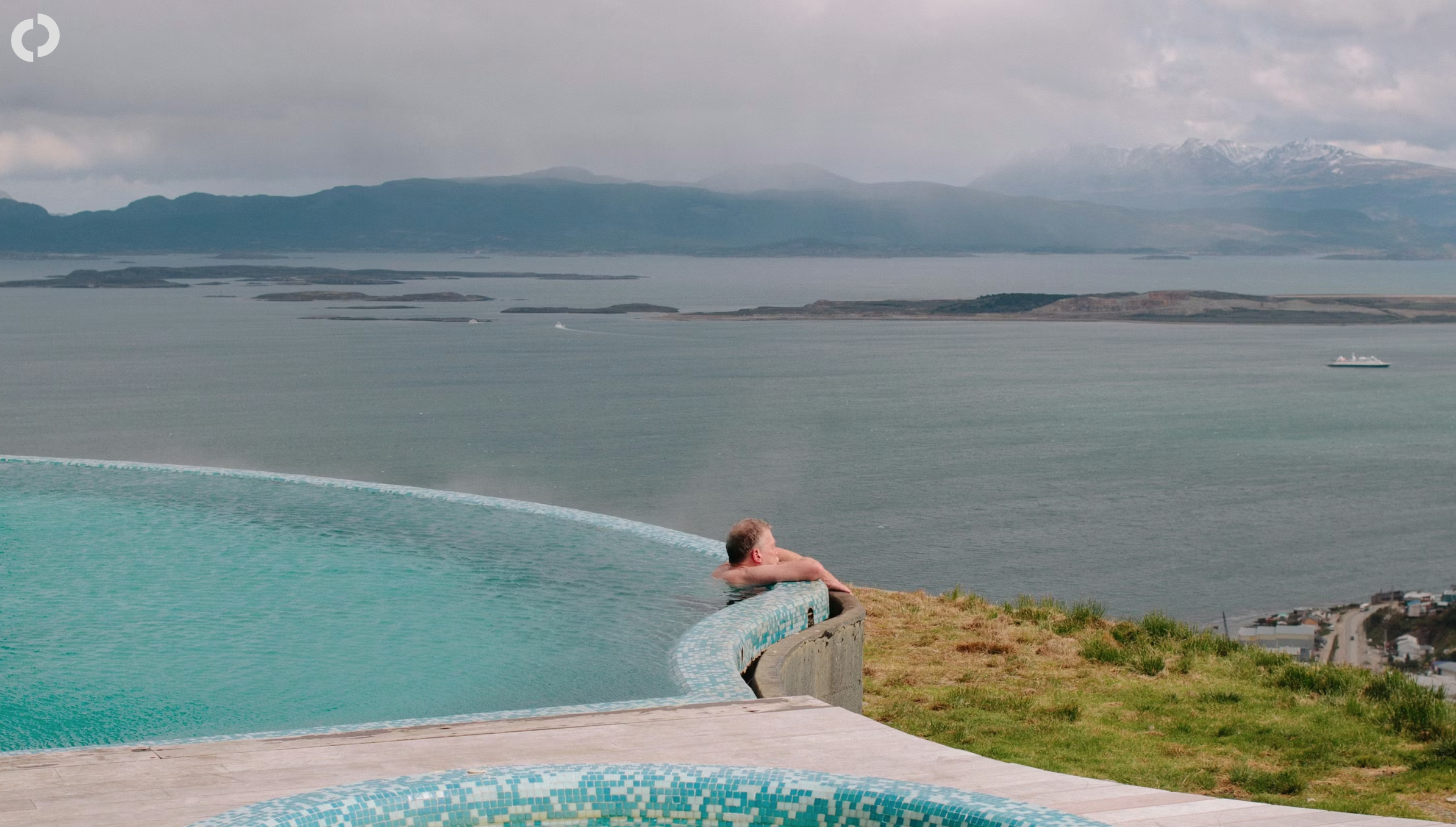
“in the same woods occupied by 350 struggling families is the Arakur Hotel, the town’s most expensive five-star hotel” - photo and quote from theoutline.com
the winters here are about as brutal as one could imagine. Frederico mentioned that the government sometimes provides space heaters to people, but because the structures are makeshift, the heaters often cause devastating house fires. the state offers this temporary patch instead of providing access to homes build to survive long, harsh winters.
due to the subantarctic climate and geographic isolation, people are also at the mercy of food shipments arriving from elsewhere. while visitors eat $200 king crab and sleep in modern condos with waterfront views, the people here live on about $662 dollars per month salaries and have limited access to fresh, nutritious foods.
similar factors affect communities all over the world. we are a huge part of the problem by temporarily residing in places like this on remote US salaries. the divide here seems glaringly apparent considering that about 100 years ago, genocidal figures were called upon to exterminate the indigenous peoples of Tierra del Fuego. One such killer has been quoted saying, “to civilize, first you have to maintain them and then you have to dress them and you have to educate them; it is better to put a bullet in them, the story ends right away.” now, aggressive land grabs and legislation initiatives continue to keep people oppressed, harm the environment, and cater to rich foreigners and investors.
i was alone here for a few weeks, and mentally tanked when the violent [redacted] realities of the US were thrust upon us with no retribution in sight. one day, i was walking in the snow to find measuring cups when i came across a carnival celebration. people were dressed in fluttering blue and orange outfits with cartoon sequin patches sewn on. many of their faces were adorned with clown paint, and they danced around a circle of drummers pounding deep, rhythmic beats. ceremonial steps of another time seemed present, woven into a new tradition alongside big screens and bright flashing lights. attendees were spraying what looked like foamy silly string at each other while laughing joyously.
people are so fucking resilient. whilst very aware that i am a white outsider who’s attempting to refrain from colonizing anthropologists’ views, it still seems that from my lens, that despite desolate harsh winters and droves of haughty, privileged tourists, the people here prevail. they create their own color and joy. for thousands of years, people hunted and gathered and lived naked purposefully through colder and darker days than we could possibly imagine. i held back white tears as i watched them dance and sing.
[people will prevail as the predator class scurries underground]
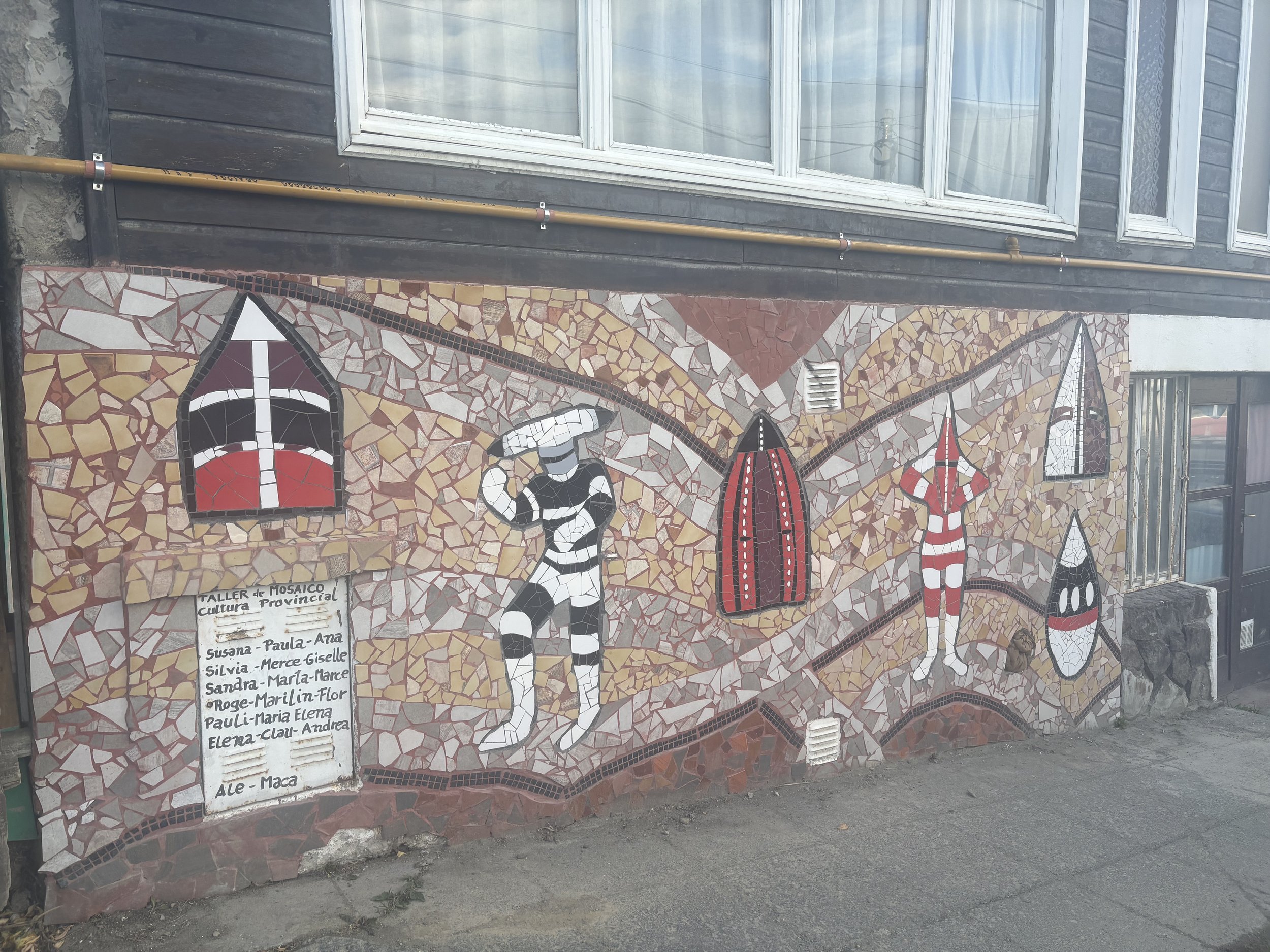
building mosaic portraying Selk’nam klóketen initiation rite ceremonial masks and body paint.
references:
Fank, Lucía. Vulnerabilidad urbana en asentamientos informales de Ushuaia. Una aproximación analítico-comparativa desde la mirada de distintos actores. Cuaderno Urbano, June 2021.
Gusinde, Martin, Barthe, C and Barral, The Lost Tribes of Tierra del Fuego: Selk’nam, Yámana, Kawésqar. Thames & Hudson, 2015.
Centro Cultural Argentino de Montaña. Anthropologist Anne Chapman and the Selk'nam culture. [https://old.culturademontania.org.ar/Historia/anne-chapman-un-chaman-de-los-confines-del-mundo.html]
Living Cost. Oct 2025 - Cost of Living in Ushuaia.[https://livingcost.org/cost/argentina/ushuaia]
Museo Maritimo de Ushuaia. Indigenous in Tierra del Fuego. [https://museomaritimo.com/en/indigenous]
The Outline. Mar 2017 - Life at the end of the world. [https://theoutline.com/post/1231/life-at-the-end-of-the-world-ushuaia-argentina]
